Roofing Materials Guide for Redondo Beach, CA Homeowners
Expert Roofing Materials in Redondo Beach, CA — Storm-Tested, Warranty-Backed
Compare roofing materials for Redondo Beach's coastal climate — asphalt, tile, metal, TPO & more. Lifespan, costs & local code info from Redondo Beach Roof Masters.
- Licensed & Insured
- Locally Owned & Operated
- 24/7 Emergency Service
- Financing Available
- Free Inspection & Estimate
Request Your
Free EstimateChoosing the right roofing material is one of the most consequential decisions a Redondo Beach homeowner can make. Unlike inland communities, Redondo Beach presents a distinct combination of environmental stressors that can significantly shorten the lifespan of the wrong material — or dramatically extend the life of the right one.
Coastal salt air accelerates corrosion on metal fasteners and certain roofing systems. Year-round UV intensity in Southern California degrades organic materials faster than in cooler climates. While Redondo Beach receives relatively modest annual rainfall, storms can arrive quickly and test drainage performance. The region also sits within designated fire hazard zones, making fire-resistance ratings a genuine safety concern rather than a formality. High winds from Pacific storms add another layer of consideration.
This guide walks Redondo Beach homeowners through every major roofing material option available locally — covering lifespan, cost, climate compatibility, fire ratings, and HOA considerations — so you can make a fully informed decision before your next roofing project.
Understanding Your Roofing Material Options in Redondo Beach
Redondo Beach homeowners have access to a wide range of roofing materials, each suited to different home styles, budgets, and performance priorities. The six primary categories you will encounter are asphalt shingles, architectural or dimensional shingles, metal roofing, concrete or clay tile, flat TPO membrane systems, and modified bitumen.
Each material category performs differently under the specific pressures of a coastal Southern California climate. Some excel in UV resistance but are vulnerable to salt-air corrosion without proper coatings. Others offer outstanding fire ratings — increasingly important as California expands its fire hazard severity zone maps — but may carry higher upfront costs.
Local building codes enforced by the City of Redondo Beach require roofing materials to meet minimum fire-resistance classifications, typically Class A for most residential applications. If your property falls within a homeowners association, additional restrictions may apply to material type, color, and finish. Many HOAs in the South Bay area have strict aesthetic guidelines that limit choices to tile or certain shingle profiles.
Understanding these constraints before you shop is essential. The sections below break down each material category in detail, giving you a clear picture of what works best in Redondo Beach's unique environment and what trade-offs each option involves.
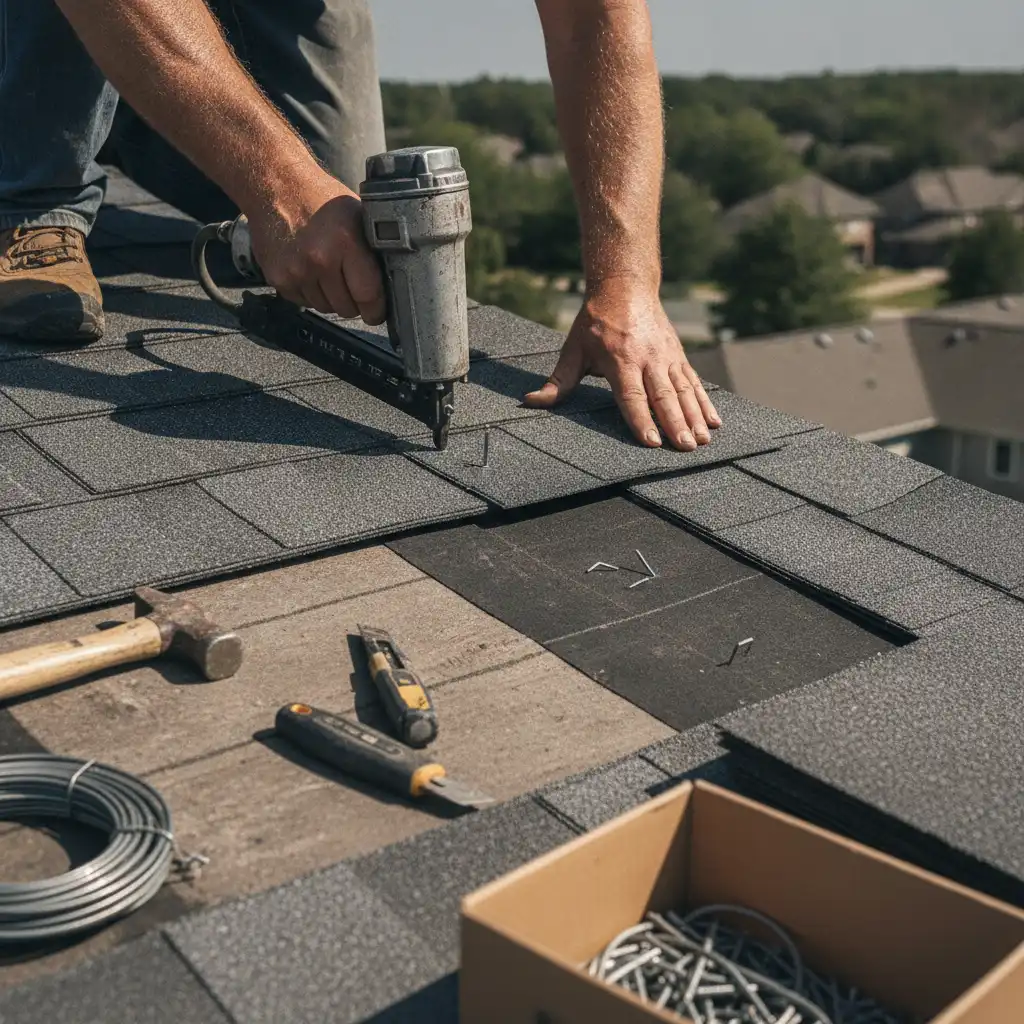
Our team in action — roofing professionals serving Redondo Beach
How Redondo Beach's Climate Affects Your Roofing Material Choice
Selecting a roofing material without accounting for Redondo Beach's specific environmental conditions risks premature failure and unexpected repair costs. Here is how local factors should guide your decision.
UV Exposure: Southern California receives among the highest annual UV indexes in the continental United States. Materials without strong UV-reflective granules or coatings — such as basic 3-tab shingles — will degrade faster here than the same product in a northern climate. Metal roofing with reflective finishes and clay or concrete tile are the strongest long-term performers under intense sun.
Coastal Salt Air: Properties within a half-mile of the Pacific Ocean face accelerated corrosion risk. Bare galvanized steel fasteners and uncoated metal panels can rust prematurely. Aluminum roofing, clay tile, and TPO membranes are inherently salt-resistant and are preferable for homes closest to the beachfront.
Fire Risk: Redondo Beach and surrounding South Bay communities are increasingly aware of wildfire proximity. All materials installed should carry a minimum Class A fire rating. Clay tile, metal, and fiberglass-based asphalt shingles all qualify.
HOA and Code Compliance: Many Redondo Beach HOAs mandate specific materials and colors. Always verify HOA covenants and City of Redondo Beach building permit requirements before purchasing materials. Your roofing contractor should be familiar with local approval processes.
Roof Pitch: Low-slope roofs common in Redondo Beach bungalows require flat roofing systems like TPO or modified bitumen rather than tile or shingles, which need adequate slope for proper drainage.
Roofing Materials Available in Redondo Beach, CA
Asphalt Shingles (3-Tab)
Three-tab asphalt shingles are the most affordable roofing option and are widely available throughout Redondo Beach. They consist of a fiberglass mat base coated with asphalt and topped with mineral granules. In Redondo Beach's climate, the intense UV exposure accelerates granule loss, which is the primary failure mode for this material. Salt air can also degrade the adhesive strips over time. On the positive side, they install quickly, are easy to repair, and carry Class A fire ratings when manufactured with fiberglass cores. Lifespan: 15–20 years in coastal Southern California conditions. Cost: Approximately $90–$130 per square installed.
Architectural / Dimensional Shingles
Architectural shingles are a significant upgrade over 3-tab products. Their multi-layer construction creates a dimensional appearance that mimics wood shake or slate and provides greater wind resistance — a real advantage during Pacific storm events. The heavier granule coating offers improved UV protection, making them noticeably more durable than 3-tab options in Redondo Beach's sun-intensive environment. Many architectural shingle products carry wind warranties up to 130 mph. They remain an HOA-friendly option in communities that prefer the look of traditional shingles. Lifespan: 25–35 years with proper ventilation. Cost: Approximately $150–$220 per square installed.
Metal Roofing
Metal roofing — including standing seam steel, aluminum, and metal tile profiles — is highly durable and increasingly popular in coastal Redondo Beach neighborhoods. Aluminum is particularly well-suited here because it is naturally corrosion-resistant and will not rust in salt-air environments the way bare steel can. Metal roofs reflect solar energy efficiently, reducing cooling loads during warm Southern California months. They carry Class A fire ratings and perform well in high winds. The primary drawbacks are higher upfront cost and the need for professional installation. Lifespan: 40–70 years depending on material and coating. Cost: Approximately $350–$700 per square installed.
Concrete or Clay Tile
Tile roofing is the signature look of Southern California architecture, and Redondo Beach homes feature it widely. Clay tile is naturally resistant to salt air, UV degradation, and fire — earning a Class A rating without additional treatments. Concrete tile offers similar benefits at a lower price point but is heavier, requiring a structurally sound roof deck. Both materials allow airflow beneath tiles, which helps with natural cooling. The main vulnerability is cracking under foot traffic during maintenance. HOAs frequently mandate tile in certain Redondo Beach neighborhoods. Lifespan: 40–60 years for concrete; 50–100 years for clay. Cost: $300–$600 per square installed.
Flat / TPO Roofing
Thermoplastic polyolefin (TPO) is the leading single-ply membrane system for flat and low-slope roofs common on Redondo Beach bungalows and modern homes. TPO membranes are heat-welded at seams, creating a watertight barrier that handles standing water effectively. White TPO membranes reflect UV radiation well, reducing interior heat gain — a meaningful benefit in Southern California. Proper drainage design is critical for flat systems in any climate. TPO is also resistant to algae growth and chemical exposure. Lifespan: 20–30 years with proper installation and maintenance. Cost: Approximately $250–$400 per square installed.
Modified Bitumen
Modified bitumen is an asphalt-based flat roofing system reinforced with polyester or fiberglass and modified with rubber polymers (APP or SBS). It is a reliable, proven choice for Redondo Beach homes and commercial properties with low-slope roofs. SBS-modified bitumen performs particularly well in temperature-fluctuating coastal conditions, remaining flexible rather than cracking. It can be installed in multiple layers for added protection and is relatively straightforward to repair. Reflective cap sheets are available to improve energy performance. Lifespan: 20–25 years. Cost: Approximately $200–$350 per square installed.
Ready for Roofing Materials? Get Your Free Estimate Today.
Redondo Beach Roof Masters serves Redondo Beach and the surrounding area — we'll be on-site within 24 hours.
📞 Call +1 (424) 704 91-44Why Redondo Beach Homeowners Trust Redondo Beach Roof Masters for Material Selection
At Redondo Beach Roof Masters, we have helped South Bay homeowners navigate roofing material decisions for years. Our goal is always to match the right material to your specific home, budget, and Redondo Beach's coastal environment — never to upsell you on products you do not need.
Roofing Materials FAQ for Redondo Beach Homeowners
What is the best roofing material for Redondo Beach's climate?
There is no single best answer — it depends on your roof's pitch, your budget, and your proximity to the ocean. For sloped roofs, clay tile or architectural shingles perform exceptionally well under Southern California UV and coastal conditions. For homes very close to the beach, aluminum metal roofing or clay tile are top choices because of their natural salt-air resistance. For flat roofs, TPO is the leading recommendation for Redondo Beach homes.
How do roofing material costs compare in Redondo Beach?
Three-tab asphalt shingles are the least expensive at roughly $90–$130 per square installed, while premium options like standing seam metal or clay tile can run $350–$700 or more per square. Architectural shingles occupy the middle range at $150–$220 per square. Remember that longer-lifespan materials often cost less per year of service life, making higher upfront investments financially sound over time.
How long will my roof last in Redondo Beach's conditions?
Lifespan varies significantly by material. In Redondo Beach's UV-intensive coastal climate, 3-tab asphalt shingles typically last 15–20 years, architectural shingles 25–35 years, metal roofing 40–70 years, clay tile 50–100 years, concrete tile 40–60 years, TPO 20–30 years, and modified bitumen 20–25 years. Regular maintenance and proper attic ventilation can extend any material's service life.
Do I need HOA approval before replacing my roof in Redondo Beach?
If your property is governed by an HOA, you will almost certainly need written approval before replacing your roof. Many South Bay HOAs specify approved materials, profiles, and colors. We recommend obtaining your HOA's CC&Rs and architectural guidelines before selecting a material. Our team is familiar with common HOA requirements throughout Redondo Beach and can help you prepare your submission.
Which roofing materials are most energy-efficient for Southern California?
Reflective roofing materials make the biggest difference in Southern California's sun-intensive climate. White or light-colored TPO membranes, cool-roof-rated metal panels, and light-colored tile all reflect solar energy rather than absorbing it, reducing attic temperatures and lowering air conditioning costs. California's Title 24 energy code sets minimum reflectivity requirements for some low-slope roofing applications.
What fire rating do I need for my Redondo Beach roof?
The City of Redondo Beach, like most of California, requires a minimum Class A fire rating for roofing materials on residential structures. Class A is the highest fire-resistance classification and is achieved by fiberglass-reinforced asphalt shingles, clay and concrete tile, metal roofing, and most TPO systems. Wood shake without fire-resistant treatment does not meet this standard and is not recommended for Redondo Beach installations.
Can I install a metal roof in a coastal Redondo Beach neighborhood?
Yes, and it can be an excellent choice — with the right product selection. Aluminum metal roofing is ideal for coastal applications because it does not rust in salt-air environments. Galvanized steel or Galvalume products with quality paint systems can also work well but require more attention to coating integrity over time. Metal roofing offers excellent wind resistance, a Class A fire rating, and some of the longest lifespans available.
How do I know if my flat roof needs TPO or modified bitumen?
Both TPO and modified bitumen are suitable for Redondo Beach flat roofs, but they have different strengths. TPO is generally preferred for newer installations because of its energy-efficient reflective surface and seamless heat-welded seams. Modified bitumen is an excellent choice for re-roofing over an existing system, for budget-conscious projects, or when local conditions favor its layered construction. A professional inspection of your existing roof deck and drainage system is the best way to determine which system fits your home.
Get Expert Roofing Material Advice in Redondo Beach
Choosing the right roofing material for your Redondo Beach home does not have to be overwhelming. At Redondo Beach Roof Masters, we offer free, no-obligation material consultations designed to take the guesswork out of the process. We assess your roof's pitch, your proximity to the coast, your HOA requirements, and your budget — then walk you through the options that genuinely make sense for your situation.
Whether you are replacing an aging asphalt shingle roof, exploring tile for the first time, or researching flat roofing systems for a low-slope bungalow, our team has the experience and local knowledge to guide you clearly and honestly.
Call us today at +1 (424) 704 91-44 to schedule your free material consultation with a Redondo Beach roofing specialist.